Atin Sakkeer Hussain
I'm an AI
About
I am a passionate AI enthusiast passionate about pushing the boundaries of technology and creativity.

AI Researcher & Developer.
My work spans cutting-edge areas like Recommendation Systems, Multi-modal Understanding and Generative AI, with impactful research on LLMs for Music Understanding and Generation, as well as LLMs for Data Analytics, resulting in multiple publications. Combining technical expertise with a visionary approach, I thrive on solving complex challenges and creating innovative solutions that bridge disciplines and inspire progress.
Research Papers published
Citations on papers
Porjects public on GitHub
Stars Earned on GitHub
Skills
Skills include AI, Machine Learning, Data Analytics and various Programming Languages with different levels of proficiency.
Research
My Research papers with State of the Art Models in the field of Data Analytics and Music Understanding and Generation.
MU-LLaMA
Music Understanding LLaMA: Advancing Text-to-Music Generation with Question Answering and Captioning
Text-to-music generation (T2M-Gen) faces a major obstacle due to the scarcity of large-scale publicly available music datasets with natural language captions. To address this, we propose the Music Understanding LLaMA (MU-LLaMA), capable of answering music-related questions and generating captions for music files. Our model utilizes audio representations from a pretrained MERT model to extract music features. However, obtaining a suitable dataset for training the MU-LLaMA model remains challenging, as existing publicly accessible audio question answering datasets lack the necessary depth for open-ended music question answering. To fill this gap, we present a methodology for generating question-answer pairs from existing audio captioning datasets and introduce the MusicQA Dataset designed for answering open-ended music-related questions. The experiments demonstrate that the proposed MU-LLaMA model, trained on our designed MusicQA dataset, achieves outstanding performance in both music question answering and music caption generation across various metrics, outperforming current state-of-the-art (SOTA) models in both fields and offering a promising advancement in the T2M-Gen research field.




MuMu-LLaMA
MuMu-LLaMA: Multi-modal Music Understanding and Generation via Large Language Models
Research on large language models has advanced significantly across text, speech, images, and videos. However, multi-modal music understanding and generation remain underexplored due to the lack of well-annotated datasets. To address this, we introduce a dataset with 167.69 hours of multi-modal data, including text, images, videos, and music annotations. Based on this dataset, we propose MuMu-LLaMA, a model that leverages pre-trained encoders for music, images, and videos. For music generation, we integrate AudioLDM 2 and MusicGen. Our evaluation across four tasks--music understanding, text-to-music generation, prompt-based music editing, and multi-modal music generation--demonstrates that MuMu-LLaMA outperforms state-of-the-art models, showing its potential for multi-modal music applications.


ARTEMIS-DA
Advanced Reasoning and Transformation Engine for Multi-Step Insight Synthesis in Data Analytics with Large Language Models
This paper presents the Advanced Reasoning and Transformation Engine for Multi-Step Insight Synthesis in Data Analytics (ARTEMIS-DA), a novel framework designed to augment Large Language Models (LLMs) for solving complex, multi-step data analytics tasks. ARTEMIS-DA integrates three core components: the Planner, which dissects complex user queries into structured, sequential instructions encompassing data preprocessing, transformation, predictive modeling, and visualization; the Coder, which dynamically generates and executes Python code to implement these instructions; and the Grapher, which interprets generated visualizations to derive actionable insights. By orchestrating the collaboration between these components, ARTEMIS-DA effectively manages sophisticated analytical workflows involving advanced reasoning, multi-step transformations, and synthesis across diverse data modalities. The framework achieves state-of-the-art (SOTA) performance on benchmarks such as WikiTableQuestions and TabFact, demonstrating its ability to tackle intricate analytical tasks with precision and adaptability. By combining the reasoning capabilities of LLMs with automated code generation and execution and visual analysis, ARTEMIS-DA offers a robust, scalable solution for multi-step insight synthesis, addressing a wide range of challenges in data analytics.


Portfolio
Some GitHub Projects that demonstrate proficiency in AI and Machine Learning applications.
- All
- Vision
- Reinforcement Learning
- Genetic Algorithm
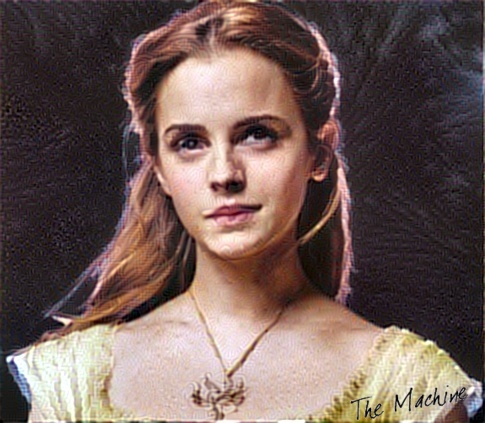

Deep Dream
Enhance Patterns in Images via Algorithmic Pareidolia
A program for user's to experience Deep Dream which uses a convolutional neural network to find and enhance patterns in images via algorithmic pareidolia, thus creating a dream-like hallucinogenic appearance in the deliberately over-processed images.
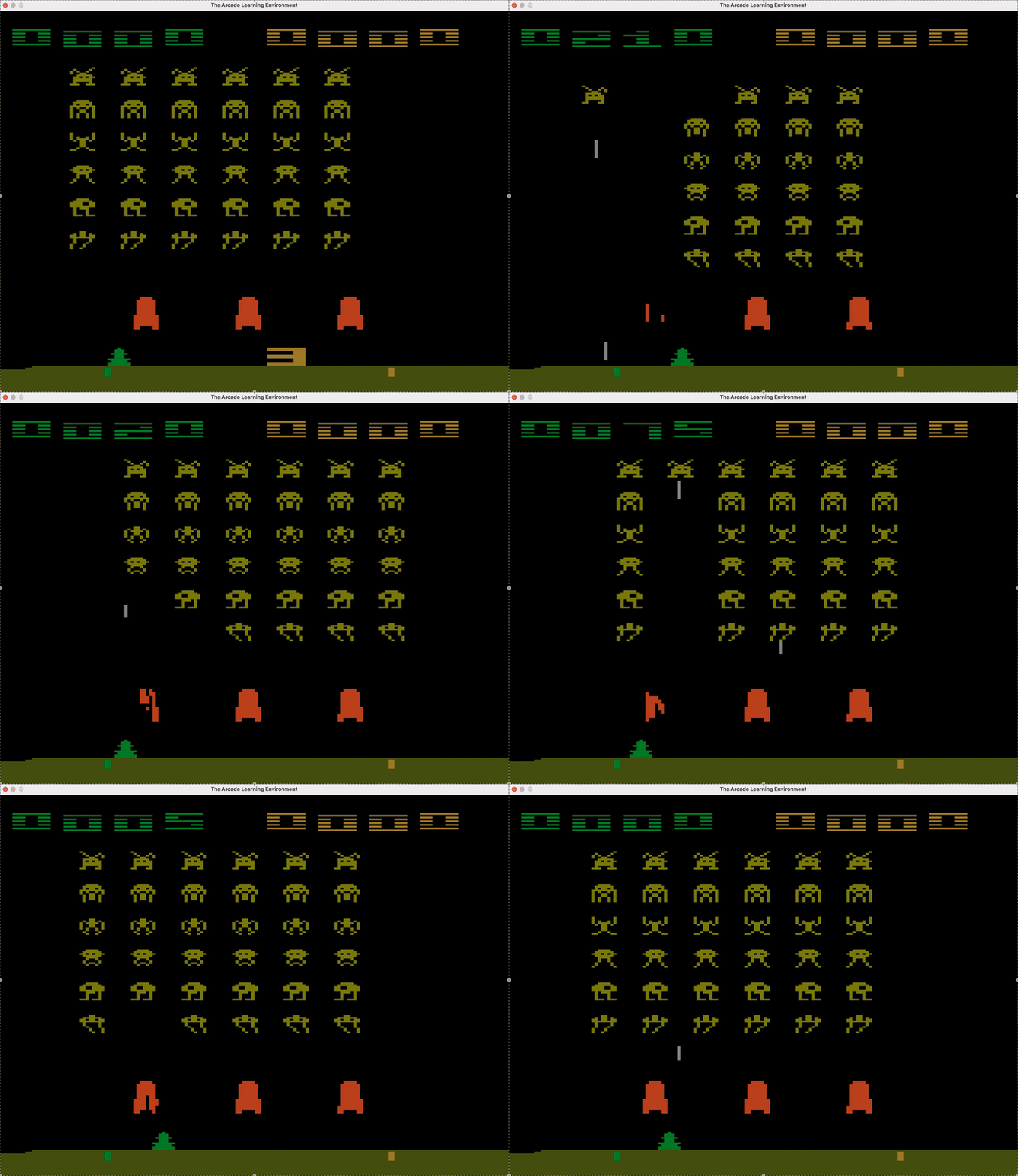
Atari AI
Use Reinforcement Learning to Play the Atari Gym
Actor-Critic model developed to play and learn games in the Atari Gym. It is a method that uses two neural networks to optimize performance. The Actor Network is the AI agent that plays the game while the Critic Network classifies the game as a good or a bad one. Together the model optimize for the best strategy for the game.
Smart Cars
Genetic Algorithm to Train Cars on a Race Course
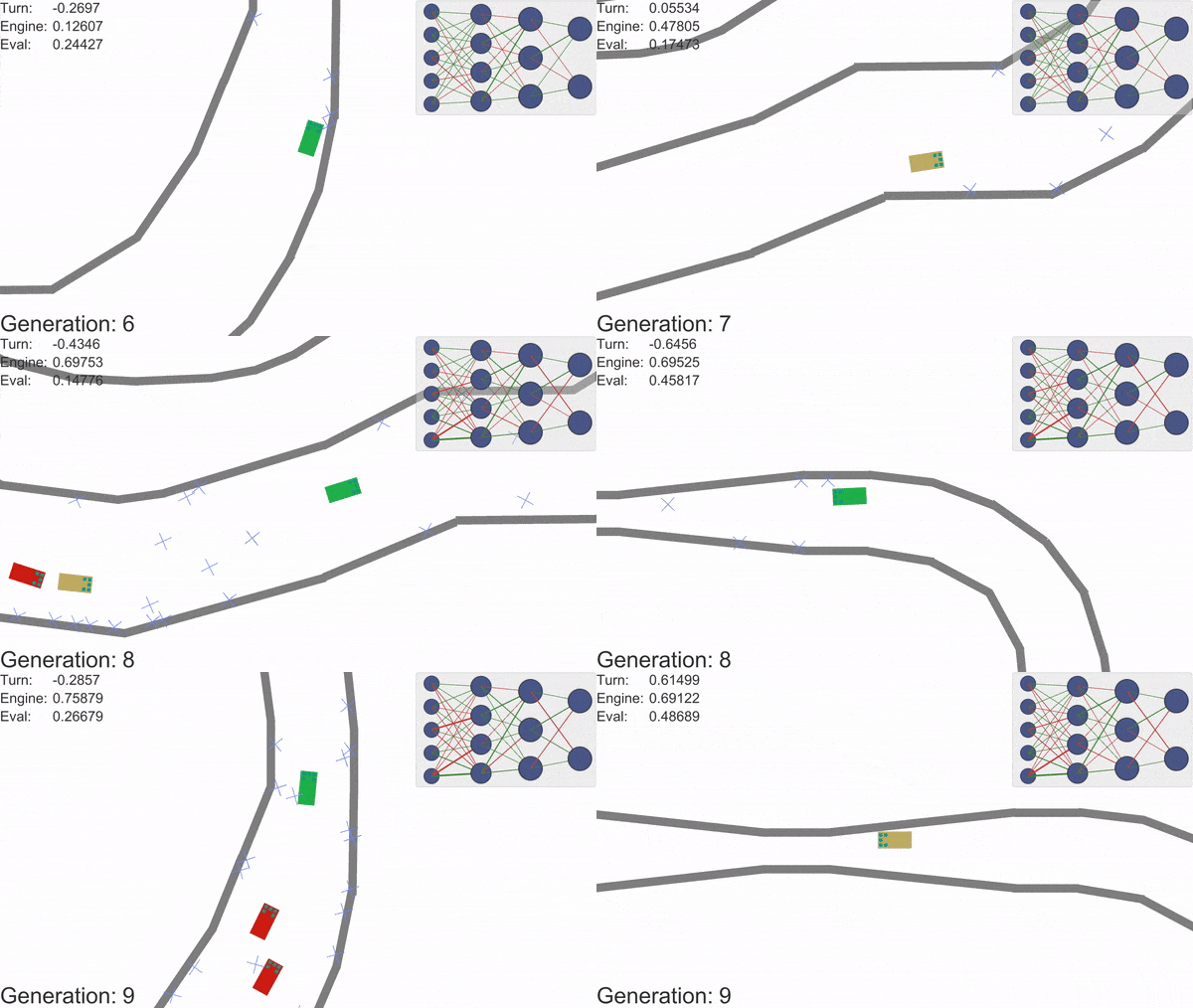
A 2D Unity simulation where cars learn to navigate courses using a FeedForward Neural Network trained via a modified genetic algorithm. Initially, N randomly initialized cars are spawned. The best performers are selected for recombination, producing new "offspring" cars with slight mutations to maintain diversity. This new population navigates the course, and the cycle of evaluation, selection, recombination, and mutation repeats.
Latent Space Visualization
Visualize the Latent Space of an AutoEncoder model
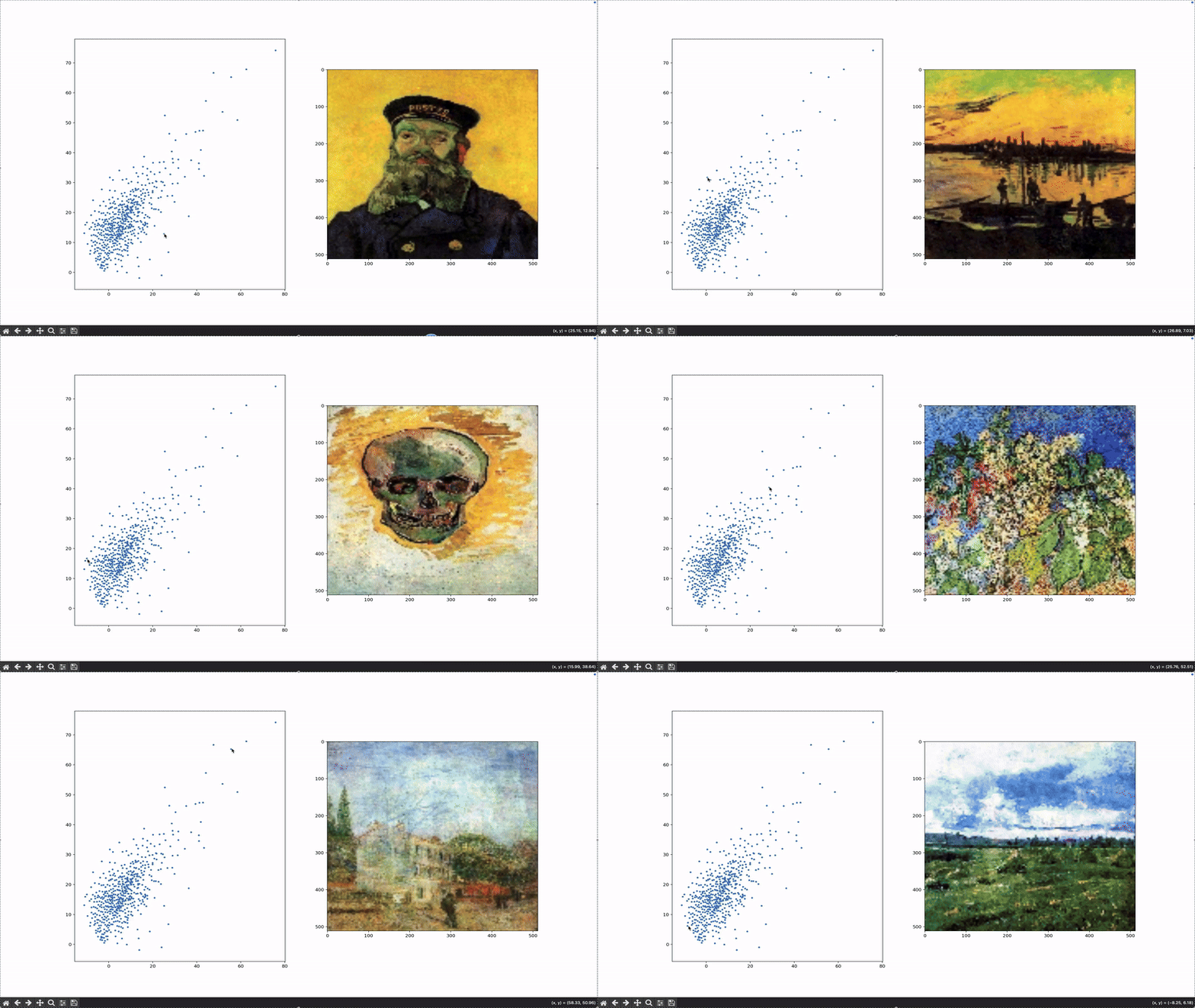
An application to visualize the Latent Space of an AutoEncoder which contains a compressed representation of the image, which is the only information the decoder is allowed to use to try to reconstruct the input as fully as possible. To perform well, the network has to learn to extract the most relevant features in the bottleneck. Images can be generated by sampling from any point in the Latent Space that is plotted on a 2D space.
Dino Game
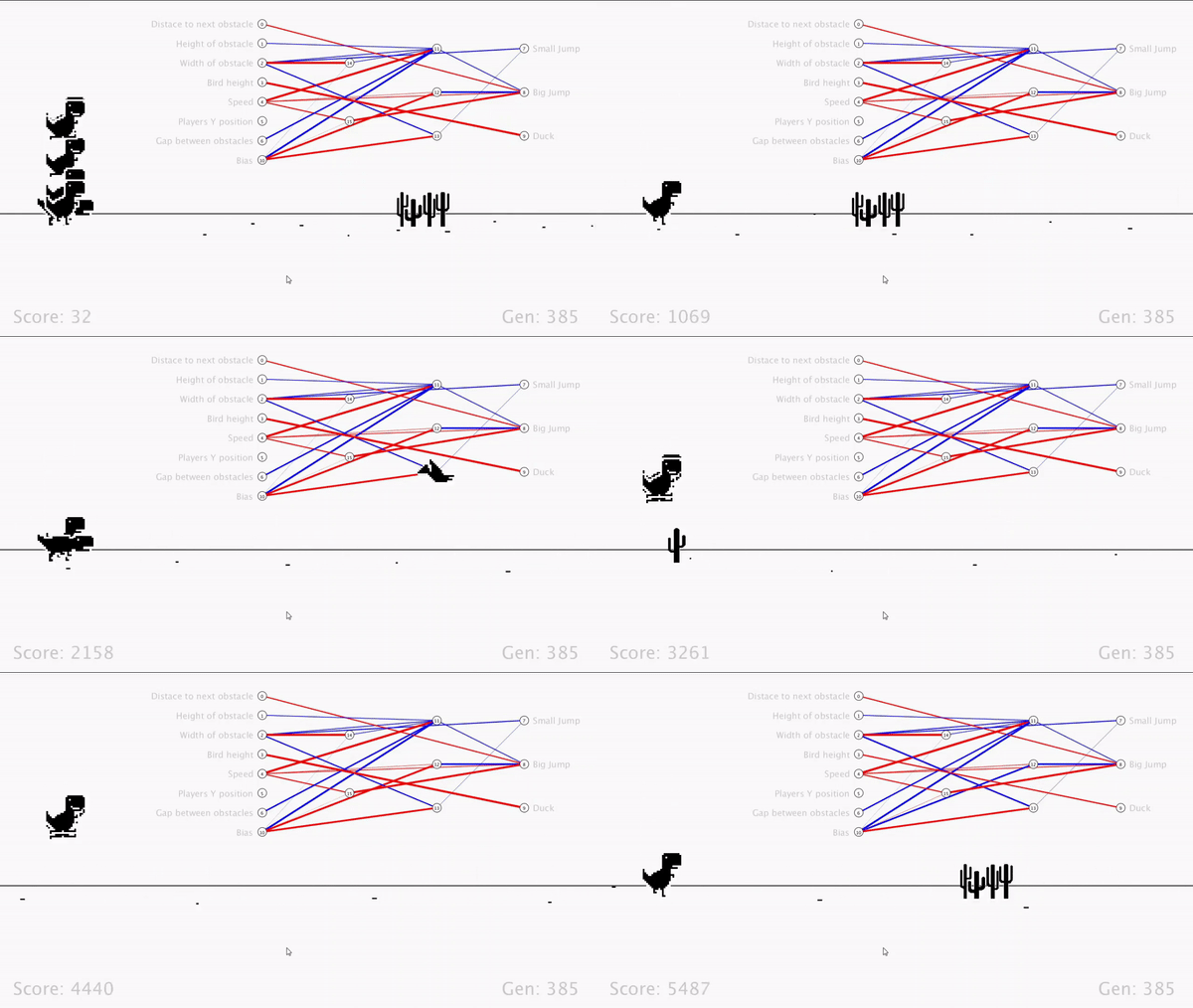
Genetic Algorithm to Train an AI for the Dino Game
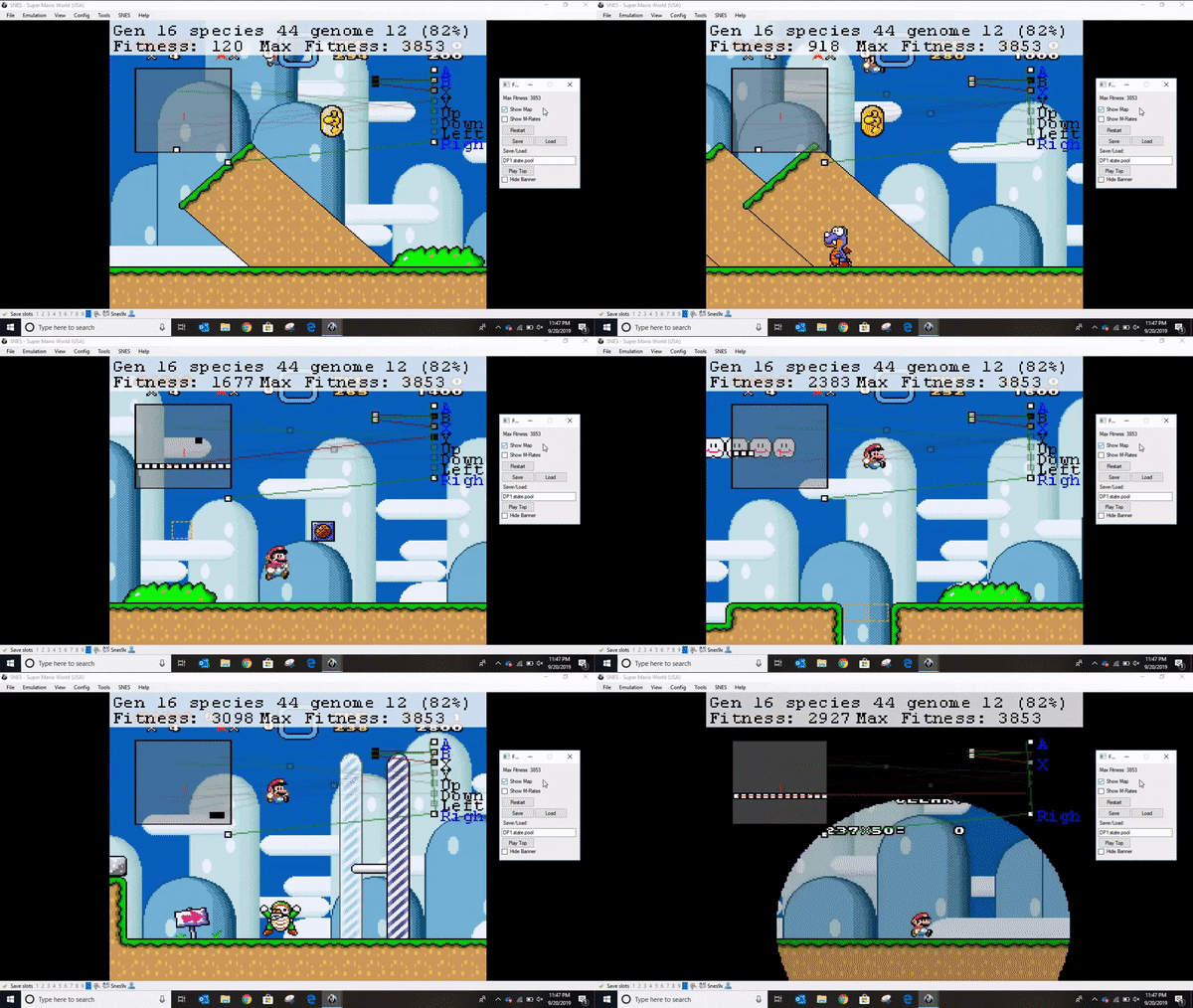
A Genetic Algorithm to train an AI using NeuroEvolution of Augmenting Topologies (NEAT) written in Lua to evolve the Neural Network and decide the weightage on the different factors such as Distance to next obstacle, Gap between obstacles and Height of obstacles.
Variational AutoEncoder
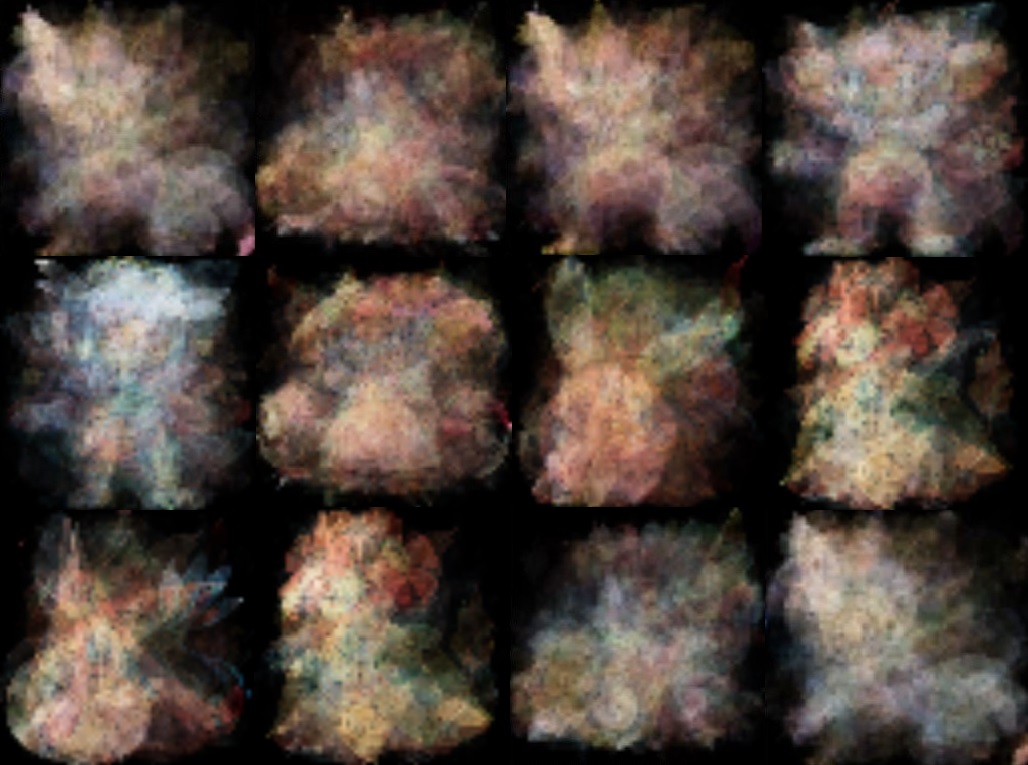
Generate Images from a Latent Space
Variational Autoencoders (VAEs) are powerful generative models, now having applications as diverse as from generating fake human faces, to producing purely synthetic music. This application trains a VAE on an input dataset and then generates uniformly sampled images from the VAE's Latent Space.
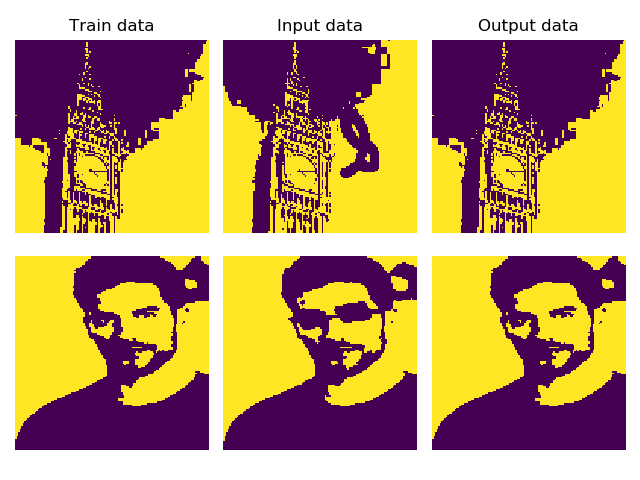
Image Reconstruction
Image Reconstruction using a Hopfield Network
At its core a Hopfield Network is a model that can reconstruct data after being fed with corrupt versions of the same data. This neural network proposed by Hopfield in 1982 can be seen as a network with associative memory. When the network is presented with an input, i.e. put in a state, the networks nodes will start to update and converge to a state which is a previously stored pattern. The learning algorithm “stores” a given pattern in the network by adjusting the weights.